
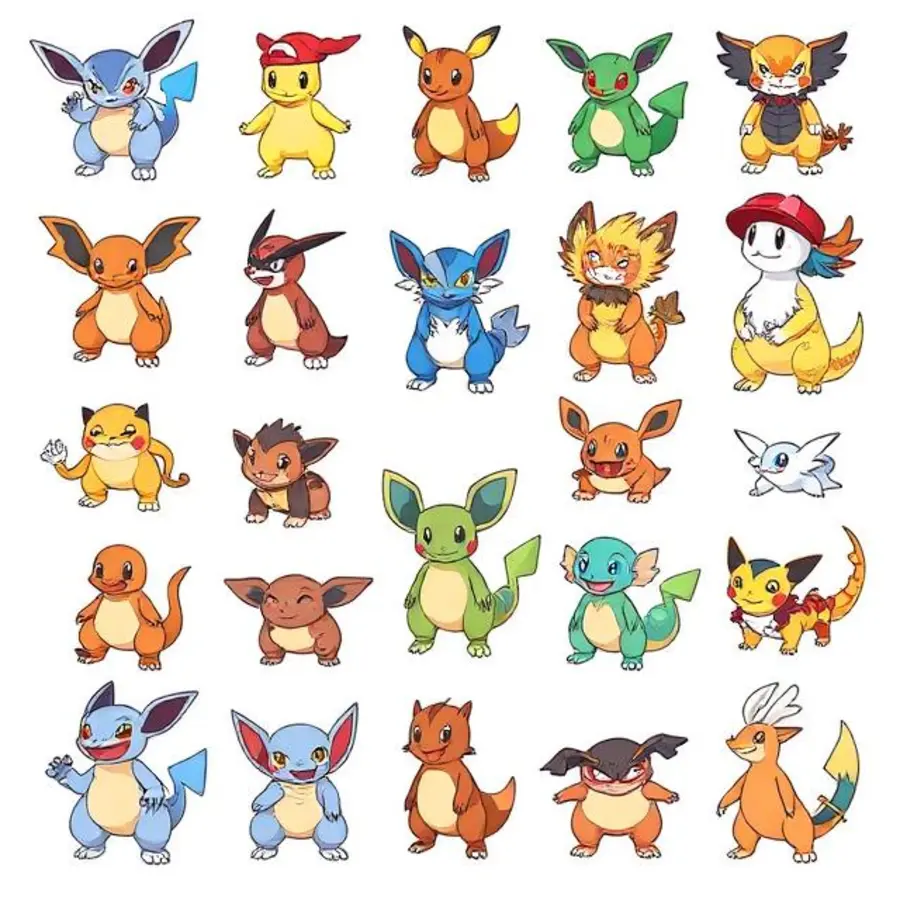
Want to complete the original Pokédex inside a browser game that starts with just four elements?
Infinite Craft lets you create nearly anything by combining items, and the community has shown it’s possible to unlock all 151 first-generation Pokémon (plus many more).
The process starts with crafting the base “Pokemon” element, then mixing it with natural, elemental, or thematic ingredients to produce individual creatures.
Recipes can shift slightly because the game relies on AI-generated combinations, so experimentation is part of the fun.
This guide walks you through the fastest paths, common variations, practical tips, and what to craft next so you can build your own discovery tree efficiently.
Quick Answer
The fastest reliable path to the base Pokemon element is:
| Step | Combination | Result |
|---|---|---|
| 1 | Water + Water | Lake |
| 2 | Lake + Water | Ocean |
| 3 | Ocean + Earth | Island |
| 4 | Island + Island | Continent |
| 5 | Continent + Lake | America |
| 6 | Earth + Earth | Mountain |
| 7 | Continent + Mountain | Asia |
| 8 | Asia + Island | Japan |
| 9 | Japan + America | Anime |
| 10 | Ocean + Ocean | Sea |
| 11 | Sea + Ocean | Fish |
| 12 | Fish + Anime | Pokemon |
Alternative short paths also work: Fish + Hawaii (or Poke + Island) or Anime + Lake. Once you have Pokemon, combine it with elements that match a creature’s type, habitat, or theme (Fire for Charizard, Water for Squirtle, Plant for Bulbasaur, Lightning/Thunder for Pikachu, etc.). Many evolutions come from combining a Pokémon with itself or with “Egg,” “Evolution,” or related items. Recipes may vary with game updates or AI responses, so try close variants if one path fails.
What Is the Pokemon Element in Infinite Craft?
Infinite Craft is a free browser game by Neal.fun. You begin with Earth, Wind, Fire, and Water and drag any two elements together to create something new. The system uses large language model logic to generate results, which means almost any real-world concept, fictional franchise, or made-up combination can appear.
The “Pokemon” element acts as a gateway. Once unlocked, it becomes the foundation for hundreds of individual Pokémon, trainers, items, locations, and even meme versions. Players treat it like a Pokédex project: unlock the base element, then systematically discover Gen 1 creatures and beyond. The discovery tree grows quickly because each new Pokémon can combine with existing elements to produce evolutions, regional forms, or entirely new discoveries.
Why Players Search for All 151 Pokemon
Completing the original 151 is a natural challenge. It tests your understanding of the crafting mechanics, rewards careful note-taking of successful paths, and creates a satisfying progression system. Many players also enjoy the surprise of AI-generated results—sometimes you get the exact Pokémon you expect; other times you invent something new. The community has already confirmed that the full first-generation set (and many later Pokémon) can be obtained through dedicated experimentation and shared discoveries.
How the Crafting System Works
You drag one element onto another. The game returns a result based on semantic relationships. Common patterns include:
- Elemental matches (Pokemon + Fire → Charizard)
- Thematic links (Pokemon + Lake → Magikarp)
- Self-combinations for evolutions (Squirtle + Squirtle → Blastoise in some paths)
- Supporting items (Pokemon + Egg → Pikachu or similar)
Because results are AI-driven, the same two elements can occasionally produce slight variations, or a previously successful recipe may shift after updates. Always keep intermediate elements (Island, Japan, Anime, Fish, etc.) in your inventory so you can retry paths quickly.
Prerequisites and Setup Tips
You only need the four starting elements. Prioritize these high-value intermediates early:
- Lake, Ocean, Sea, Fish
- Island, Continent, Mountain, Asia, Japan, America
- Anime (or alternative cultural/media paths)
- Plant, Mud, Stone, Lightning/Thunder, Volcano
Clear space in your sidebar or use the search function if the list grows long. Save successful recipes in a notes app—especially multi-step paths—so you can recreate them later.
Step-by-Step: Crafting the Base Pokemon Element
Follow the Quick Answer table above for one of the most consistent 12-step routes. Here are two popular alternatives that many players use:
Poke route (often shorter once you have Hawaii):
- Water + Water = Lake
- Fire + Fire = Volcano
- Lake + Volcano = Island
- Water + Ocean (or Lake + Water) = Ocean/Fish path
- Island + Volcano = Hawaii
- Fish + Hawaii = Poke
- Poke + Island (or Poke + Plant) = Pokemon
Anime + Lake variation: After making Japan and America as shown earlier, Japan + America = Anime, then Anime + Lake = Pokemon.
Any of these will unlock the base element. From there the real Pokédex work begins.
How to Make Individual Gen 1 Pokemon
Once you have Pokemon, try these well-documented combinations (results can vary slightly):
| Pokemon | Common Combination | Notes |
|---|---|---|
| Pikachu | Pokemon + Lightning / Thunder / Rain / Egg | Very common starting point |
| Squirtle | Pokemon + Water | Leads to Wartortle/Blastoise paths |
| Charmander / Charizard | Pokemon + Fire / Volcano | Charizard often appears directly |
| Bulbasaur | Pokemon + Plant / Leaf | Grass-type gateway |
| Magikarp | Pokemon + Lake / Fish | Evolves into Gyarados |
| Meowth | Pokemon + Cat | |
| Ponyta | Pokemon + Unicorn | Rapidash follows |
| Mewtwo | Pokemon + Wisdom / Pyramid | |
| Mew | Pokemon + Arceus / Wish / Time-related | |
| Arceus | Pokemon + God / Noah / Universe | |
| Gyarados | Magikarp + Magikarp or Pokemon + Ship | |
| Eevee | Pokemon + Stone / Village | Then add Fire/Water/Plant for Eeveelutions |
| Gengar | Pokemon + Ghost / Devil | |
| Snorlax | Pokemon + Pizza (or sleep-related) |
Evolutions frequently appear by combining a Pokémon with itself, with “Egg,” or with “Evolution.” For example, Squirtle + Squirtle has produced Blastoise in player reports, and similar self-combinations work for other lines. Keep testing type matches (Rock for Geodude, Flying for Pidgey, etc.) and habitat themes.
Because the system is generative, different guides may list slightly different recipes for the same Pokémon. This is normal—try the closest logical pair if one fails.
Practical Tips, Beginner Mistakes, and Advanced Strategies
Beginner tips
- Always make and keep the base Pokemon element first.
- Build a core set of natural elements (Plant, Mud, Stone, Lightning, Lake, Fire) before hunting rare creatures.
- Write down successful multi-step paths.
Common mistakes to avoid
- Deleting intermediate elements too early.
- Assuming every recipe is permanent—retry close variants.
- Ignoring self-combinations and “Egg” paths for evolutions.
Advanced strategies
- Create supporting concepts such as Trainer, Pokeball, Evolution, or specific regions to unlock more results.
- Use newly made Pokémon as ingredients for the next ones (e.g., once you have Pikachu, try combining it with other elements).
- Explore community-shared discoveries for the harder Gen 1 entries while still experimenting yourself—many first finds came from random but thematic mixes.
- Treat the process like a discovery tree: each successful Pokémon expands the possible combinations for the rest of the 151.
Related Recipes and What to Unlock Next
After the base Pokemon and a handful of starters, prioritize:
- Eevee and Eeveelutions — Pokemon + Stone, then add elemental matches.
- Legendary birds and beasts — thematic mixes with Ice, Thunder, Fire, or God-related elements.
- Trainer / Pokemon Master — Pokemon + Human or Train.
- Pokeball and items — useful for further combinations.
- Later-generation Pokémon — the same system works for hundreds more once you have the foundation.
These related elements strengthen your topical coverage of the franchise inside the game and open new branches of the discovery tree.
FAQ
Is it possible to make all 151 original Pokemon in Infinite Craft?
Yes. Community efforts have confirmed the full first-generation set (and many more) can be obtained through systematic combining and shared discoveries.
Why do different guides show different recipes?
The game uses AI to generate results based on semantic relationships. Multiple valid paths often exist, and results can shift slightly with updates or context.
What is the easiest way to make the base Pokemon element?
Fish + Anime is one of the most consistent. The 12-step table in the Quick Answer section is reliable for new players.
How do I make evolutions?
Try combining a Pokémon with itself, with Egg, or with Evolution. Type-matching elements also frequently produce higher stages.
Do recipes change over time?
They can. Keep core intermediates available and test close variants if a known path stops working.
What should I craft after Pokemon?
Starters (Bulbasaur, Charmander/Charizard, Squirtle), Pikachu, Magikarp, and Eevee give the fastest early progress.
Can I make Pokémon from later generations?
Yes. The same method works for many Pokémon beyond the original 151.
What if a combination fails?
Try a closely related element (Thunder instead of Lightning, Lake instead of Water, Plant instead of Leaf) or rebuild the base Pokemon and retry.
Is there a complete list of every recipe?
No single permanent list exists because of the generative nature of the game. Player communities and personal notes remain the best resources.
How can I progress faster?
Focus on high-value intermediates first, keep notes, and use newly discovered Pokémon as ingredients for the next ones.
Conclusion
Making all 151 Pokemon in Infinite Craft starts with unlocking the base Pokemon element through paths like Fish + Anime, then systematically combining it with type, habitat, and thematic ingredients.
The AI-driven crafting mechanics reward both logical thinking and playful experimentation, so different players often find slightly different routes to the same creature.
Keep your key intermediates, test self-combinations and Egg paths for evolutions, and treat every new discovery as fuel for the next one.
The real enjoyment comes from watching your personal Pokédex grow and occasionally inventing something the community hasn’t seen yet.
Dive in, start with the Quick Answer recipe, and see how far your discovery tree can go.
Once you’ve collected the originals, the same approach opens hundreds of additional Pokémon and related elements keep crafting and exploring.
